

Infographic of a conventional circadian rhythm. Image Credit: elenabsl / Shutterstock.com
Circadian rhythms are biological clocks in the body that regulate various physiological processes and behaviors of a person in approximately 24-hour cycles. These rhythms are critical for maintaining homeostasis and adapting to environmental changes, influencing sleep-wake cycles, metabolism, and cardiovascular health. The circadian clock system consists of central and peripheral clocks that are adapted to external factors, especially light, to optimize body functions throughout the day.1

Some environmental and hereditary factors that can cause disruptions in circadian rhythms1
Relationship between Lifestyle and Diseases (Cancer, Metabolic/Obesity, and Cardiovascular) with Circadian Rhythm
Modern lifestyles, which have developed along with urbanization, have a close and direct relationship with human health. One of the main factors affecting health is diet. The consumption of fast food and unhealthy food often leads to nutritional problems, such as obesity and cardiovascular disease (CVD). Therefore, paying attention to lifestyle practices from both perspectives, both material and spiritual, is essential for maintaining overall health.
In recent decades, in developing countries, the number of chronic diseases has increased rapidly, resulting in greater health concerns such as obesity, cardiovascular disease and diabetes. Therefore, lifestyle changes at all levels of society are necessary to prevent and reduce the risk of these diseases.
Influence of Circadian Rhythm on Cardiovascular Health
The metabolism of heart cells (cardiomyocytes) is regulated by circadian rhythms. Circadian rhythms, which also affect blood pressure, heart rate, platelet aggregation, as well as the incidence of various types of cardiovascular disease (CVD), play an important role in cardiovascular health. Circadian rhythm disruption, which often occurs due to changes in lifestyle, including shift work, can increase the risk of cardiovascular disease. Shift work is associated with circadian rhythm disruption and sleep deprivation, which can affect heart health.
Some estimates suggest that around 20% of workers in the industrialized world are exposed to shift work. These rhythm disturbances can affect many aspects of health, including heart health, and increase the likelihood of cardiovascular disease.
Metabolic Syndrome and Diabetes
About 25% of the world’s population has metabolic syndrome, which is associated with an increased risk of heart disease, stroke and type 2 diabetes. People with metabolic syndrome have a five times higher risk of developing type 2 diabetes and at least three times greater risk of having a heart attack or stroke. According to the World Health Organization (WHO), about 422 million adults worldwide are estimated to have type 2 diabetes, and it is predicted that the death rate from diabetes will double by 2030.
Impact of Irregular Lifestyle on Health
Research shows that an irregular lifestyle, which disrupts the body’s circadian rhythm, can increase the incidence of several diseases, including various cancers and metabolic disorders. These unhealthy lifestyles can affect the body’s biological clock, contributing to the occurrence of chronic diseases. Therefore, understanding and managing circadian rhythms is important in the prevention and treatment of these diseases.
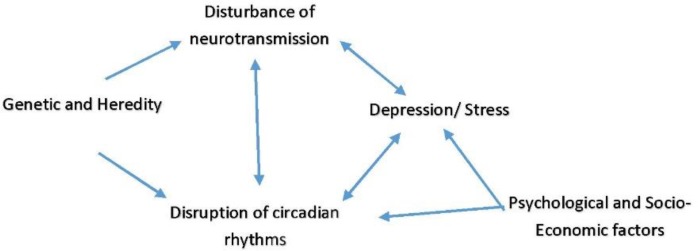
An illustration that circadian rhythm disturbances and behavioral disorders often form a cyclic relationship that exacerbates each other1
Circadian Rhythms and Psychological/Behavioral Disorders
Depression is a mental illness that can lead to a variety of medical problems and health disorders. It affects an individual’s functioning in terms of feelings, thinking, and behavior. Depression can be caused by a variety of factors, including genetic, hormonal, or physiological factors, as well as stressful environmental conditions or problems in one’s life.
One factor that plays a role in the development of depression is circadian rhythm disruption. Disruptions in circadian rhythms can contribute to the onset of depression. While the exact causes of depression are complex and involve many factors, disruptions in circadian rhythms appear to have a significant influence in the process.
Circadian rhythm disruption can be caused by a variety of things, such as inappropriate lighting conditions or an unhealthy lifestyle. These factors can affect individuals who are already prone to mood disorders, including impulsivity, mania and depression. In addition, studies show that individuals with depression have a higher risk of engaging in violent behavior. Nonetheless, factors such as family conditions, social background, and other individual factors also play a role in exacerbating these conditions.
Manage Your Health
The importance of understanding circadian rhythms and their effect on health cannot be overlooked, especially in the context of modern lifestyles that are often disorganized. Circadian rhythm disruption, which is influenced by environmental factors and poor living habits, can increase the risk of various chronic diseases, including cardiovascular disorders, metabolic syndrome, obesity, diabetes, and even psychological disorders such as depression.
Therefore, adopting a healthy lifestyle that pays attention to body balance, adequate sleep, and a good diet is essential. Managing circadian rhythms wisely, including the timing of work and sleep, can help prevent long-term health problems. By raising awareness of the role of circadian rhythms and making healthier lifestyle changes, we can improve our quality of life, reduce the burden of disease, and achieve more optimal health in the future. Have a great day ! 🙂
Reference:
- Farhud D, Aryan Z. Circadian Rhythm, Lifestyle and Health: A Narrative Review. Iran J Public Health. 2018 Aug;47(8):1068-1076. PMID: 30186777; PMCID: PMC6123576.

