Persons with disabilities are more likely to be inflicted by a wide range of diseases such as obesity, depression, metabolic disorders and cardiovascular events. Less-commonly addressed are diseases affecting the veins, especially among individuals with difficulty in movement, which can significantly disrupt their daily living.
Read on to understand more about conditions affecting the veins and how we can help prevent them.
Disability and Disorders of the Veins
It is estimated that about 1.3 billion people worldwide endure a form of disability. Persons with disabilities are more likely to suffer from diseases such as diabetes, obesity, stroke and depression, as well as pressure sores, fatigue, recurrent infections and bowel and bladder problems.
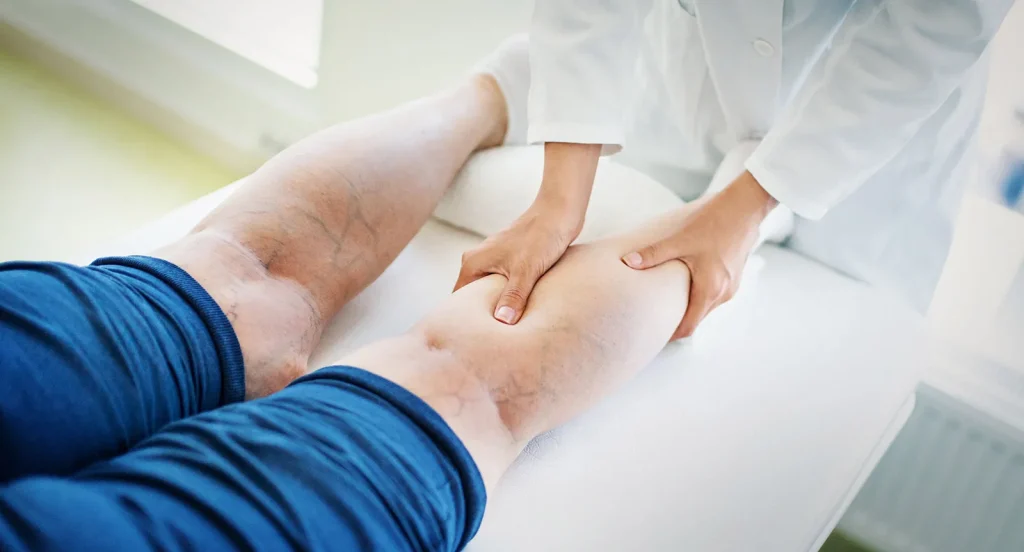
Less frequently addressed, but widely present, are disorders of the veins of the lower limbs, which are commonly seen among individuals who experience difficulty in moving around. These include a wide range of conditions such as bulged “varicose” veins, large wounds around the legs and severe infections among others. Studies have shown that diseases in the veins can lead to serious morbidity and can adversely impact a person’s subjective well-being.
Who’s at Risk?
Individuals who experience difficulty in walking, including those with lower limb paralysis following stroke, spinal cord injury or neurological diseases, muscular dystrophies, cerebral palsy (CP), disc degenerative disorders, multiple sclerosis and other conditions that affect the brain, spinal cord and nerves.
People suffering from arthritis and those who have undergone amputations due to trauma or vascular disease are also likely to suffer disorders of the veins.
Why do Diseases Occur in the Veins?
In people with healthy veins, blood from the legs is carried upwards to the heart. The flow of blood in this direction is maintained by a “pump” formed by the calf muscles and their adjacent veins, which propels the blood towards the heart. This “pump” is activated during activities like walking.
In situations where the calf muscle “pump” is not stimulated by normal activities, as seen in individuals with health conditions that keep them from actively moving about, the blood in the veins begins to flow more slowly and tends to pool around the dependent (lower most) part of the limb.
This causes the veins in the affected limb to bulge and eventually results in various vein disorders such as varicose veins and slow-healing venous (‘of the vein’) ulcers or wounds, as well as other complications such as repeated infections of the limb, sepsis and depression, which can detrimentally affect the person’s quality of life.
Signs of Venous Disease
A number of symptoms precede and accompany the development of venous disease. Some of these are listed below.
- Swelling of the limb
- Itching
- Slow-healing of cuts/ wounds over the limbs
- Varicose veins
- Other prominent “blue”, “green” or “purple” veins (over the legs/ feet)
- Skin colour change (to a dark shade of brown/ black) in the lower limbs
- Thickening of skin
- Repeated infections
- Open wounds over the lower limb (without any known cause)
If you notice any of the above-mentioned symptoms in yourself or a loved one, visit a vascular specialist at the earliest.
How Can We Prevent It?
Here are a few ways to avoid or delay the onset of venous diseases in the legs.
Avoid Hanging the Limb Without Support
Hanging the legs from a chair or the side of the bed without making adequate contact with the floor or a supportive foot stool causes the blood to pool in the veins around the dependent (lower most) part of the limb. This results in slow-healing wounds and infection in that part of the leg.
This can be prevented by providing foot support with adequate cushioning, such as a raised stool or a footrest, to relieve the pressure caused by the collected blood, consequently keeping away potential complications.
Moisturize
Keeping the skin moist with mineral-based moisturizers helps prevent small, inadvertent tears in the skin which can lead to recurrent infection with poor healing.
It is recommended to avoid applying cooking oils, such as coconut oil, for this purpose as it increases the risk of infection as well as the likelihood of insect bites.
Elevate
Specialists often recommend raising the limb while lying down at night. This can be done by placing a soft cushion or two under the feet such that the limbs are at the same level as the patient’s chest while he/ she is lying flat on the bed.
Care must be taken to avoid placing anything beneath the calf muscles in order to prevent life-threatening complications such as deep vein thrombosis (DVT).
Compression Therapy
Commonly advised by experts, compressive hosiery or bandaging is applied over the lower limbs to prevent the collection of blood in the dependent regions. These compression “stockings” and “high-grip bandages” hold the limb tightly to help propel the flow of blood and conveniently come in different sizes.
They are worn or applied soon after awakening in the morning and removed before going to bed. Adequate moisturizing of the skin is suggested prior to applying it. Furthermore, appropriate fitting of the fabric is necessary to achieve the desired results.
Compression therapy is not recommended in individuals with infections and conditions such as arterial disease due to the high risk of complications.
It is advised to consult a vascular specialist to receive the right kind of treatment and avoid any untoward events.
Calf Muscle “Pump” Activation
The muscles in the calf, together with the surrounding veins, act as a “pump” that pushes blood towards the heart during activities like walking. Simple exercises that mimic walking make the calf muscles contract and help induce upward flow of blood, thereby delaying and preventing diseases in the veins.
Your doctor might recommend a few easy-to-follow exercises that can be performed without any aid.
Disorders of the veins are progressive in nature and may require multiple interventions to prevent and treat complications.
More definitive treatment options include LASER and chemical (foam) ablation of the affected veins, among others. It is recommended to consult a vascular specialist to get evaluated for the same.
Key Takeaway
- Diseases of the veins commonly affect people who experience difficulty in movement
- Disorders affecting the veins can adversely impact a person’s overall health and well-being
- There are many ways to prevent and treat disorders of the veins
Sources
- Todd M. Strategies to prevent the progression of venous and lymphovenous disease. British Journal of Community Nursing. 2012 Aug 1;17(Sup9b):3-14.
- Bergan JJ, Schmid-Schönbein GW, Smith PD, Nicolaides AN, Boisseau MR, Eklof B. Chronic venous disease. New England Journal of Medicine. 2006 Aug 3;355(5):488-98.
- Centers for Disease Control and Prevention (CDC); Disability and Health Related Conditions https://www.cdc.gov/ncbddd/disabilityandhealth/relatedconditions.html
- World Health Organisation (WHO); Disability www.who.int/news-room/fact-sheets/detail/disability-and-health
Disclaimer
The data presented in this article has been collected from published scientific literature as well as the experience of trained medical personnel among other authentic sources. It is meant to help identify individuals who are likely to suffer the health problems listed in this article . However, it is advised to seek the counsel of the treating doctor before proceeding with any of the outlined suggestions.
