
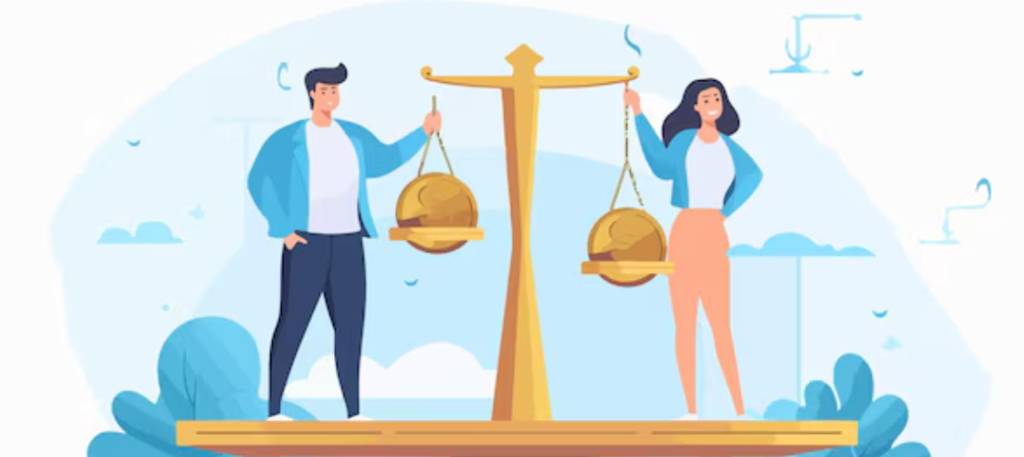
In the intricate fabric of societal structures, gender roles are threads woven with historical, cultural, and psychological influences. These roles perpetuate inequalities that manifest differently for women and men. For women, external oppression often takes the form of systemic injustices, visible discrimination, and societal expectations. Men, on the other hand, face a subtler yet equally insidious cruelty—an internalized battle dictated by rigid norms of masculinity. Understanding these dynamics requires delving into examples, cultural factors, and the psychological and medical implications that sustain these disparities.
External World of Women
The external world has historically been harsher on women, systematically enforcing limitations through overt discrimination and objectification. In many cultures, women are disproportionately affected by gender-based violence. According to a 2021 report by the World Health Organization, nearly one in three women globally has experienced physical or sexual violence in their lifetime. This alarming statistic is exacerbated by societal structures that perpetuate victim-blaming, weak legal protections, and normalized misogyny. For instance, in countries where patriarchal traditions dominate, women may be denied education or economic independence, limiting their ability to escape abusive environments. Additionally, the gender pay gap serves as a glaring example of economic oppression. Studies in the United States reveal that women earn approximately 82 cents for every dollar earned by men, with the disparity widening for women of color.
Another external pressure comes from beauty standards and the commodification of women’s bodies. The media often projects unrealistic ideals, compelling women to conform to unattainable norms. These pressures have severe psychological and medical consequences. Body dysmorphia and eating disorders, such as anorexia nervosa and bulimia, disproportionately affect women, partly fueled by societal obsession with thinness. A 2018 study in the Journal of Eating Disorders found that approximately 90% of individuals with eating disorders were women. These external cruelties are not merely individual struggles but societal symptoms of deep-seated inequities.
Internal World of Men
While the external world disproportionately targets women, men often grapple with internalized oppression rooted in societal expectations of masculinity. From a young age, boys are taught to suppress vulnerability and adhere to a rigid standard of strength, dominance, and emotional stoicism. Phrases like “man up” or “boys don’t cry” reinforce the notion that emotional expression is a sign of weakness. This cultural conditioning leads to significant psychological consequences, including higher rates of untreated mental health issues among men. According to the American Foundation for Suicide Prevention, men die by suicide at nearly four times the rate of women in the United States, highlighting the devastating impact of internalized struggles.
The internal cruelty faced by men also stems from the societal undervaluation of emotional intelligence and nurturing qualities, which are often dismissed as feminine traits. This dismissal creates a void in men’s ability to form deep, meaningful connections, leading to feelings of isolation and inadequacy. Studies on emotional labor—the invisible work of managing feelings in relationships—show that women disproportionately bear this burden, leaving men under-equipped to navigate emotional landscapes. For example, a 2019 study in the Journal of Men’s Health found that men with rigid views of masculinity were less likely to seek therapy or discuss their emotions openly, perpetuating cycles of unaddressed mental health issues.
Cultural factors play a pivotal role in shaping these gendered experiences of oppression. In collectivist societies, traditional gender roles are often rigidly enforced, with women relegated to caregiving roles and men expected to be providers. These expectations limit individual autonomy and perpetuate systemic inequalities. In contrast, individualistic societies, while seemingly progressive, often disguise their own forms of oppression under the guise of choice. Women in these contexts may face the “having it all” paradox, where they are expected to excel in their careers while also fulfilling traditional family roles, leading to burnout and identity conflicts. Men, meanwhile, face the pressure of hyper-individualism, where their worth is measured by their ability to succeed independently, further isolating them from emotional support networks.
The medical and psychological implications of these gendered cruelties are profound. For women, the chronic stress associated with systemic oppression can lead to higher rates of anxiety, depression, and autoimmune diseases. A 2020 study in Psychosomatic Medicine found that women exposed to long-term stress, such as workplace discrimination or domestic violence, had significantly higher cortisol levels, a biomarker linked to chronic health conditions. Men, on the other hand, often experience “silent suffering,” where their internal struggles manifest as physical health issues. Studies show that men with untreated depression are more likely to develop cardiovascular diseases, a reflection of the mind-body connection.
Despite these challenges, there are pathways to change. Recognizing and dismantling systemic injustices against women requires collective action, including policy reforms, educational initiatives, and cultural shifts. For men, fostering emotional intelligence and challenging traditional norms of masculinity are crucial steps toward alleviating internalized oppression. Community-based programs, such as men’s mental health support groups, have shown promise in creating safe spaces for emotional expression.
The disparities in how the world is cruel to women externally and men internally underscore the complexity of gender-based oppression. Women bear the visible scars of systemic injustices, while men carry the invisible wounds of internalized expectations. Addressing these issues requires a nuanced understanding of cultural, psychological, and medical factors, as well as a commitment to fostering equity and empathy. Only by acknowledging and addressing these interconnected cruelties can society move toward a more inclusive and compassionate future.
References
- World Health Organization. (2021). Violence against women prevalence estimates, 2018. Retrieved from WHO website
- U.S. Census Bureau. (2020). Income and Poverty in the United States: 2020. Retrieved from Census Bureau website
- Journal of Eating Disorders. (2018). Statistics on eating disorders and gender differences. Retrieved from Journal of Eating Disorders
- American Foundation for Suicide Prevention. (2021). Suicide statistics. Retrieved from AFSP website
- Journal of Men’s Health. (2019). The relationship between masculinity and mental health service utilization. Retrieved from Journal of Men’s Health
- Psychosomatic Medicine. (2020). Stress and health disparities among women: The role of chronic cortisol elevation. Retrieved from Psychosomatic Medicine
- UNICEF. (2020). Gender roles and education disparities in developing countries. Retrieved from UNICEF website
- The Paradox of Choice: Why More Is Less by Barry Schwartz. HarperCollins, 2004. Discusses societal expectations in individualistic cultures.
- Case studies on emotional labor. (2017). Gender and emotional work in intimate relationships. Published in the Journal of Family Studies.
- Cardiology and Mental Health: An Intersectional Perspective. (2021). Examining depression and cardiovascular disease in men. Published in the International Journal of Cardiology.
