
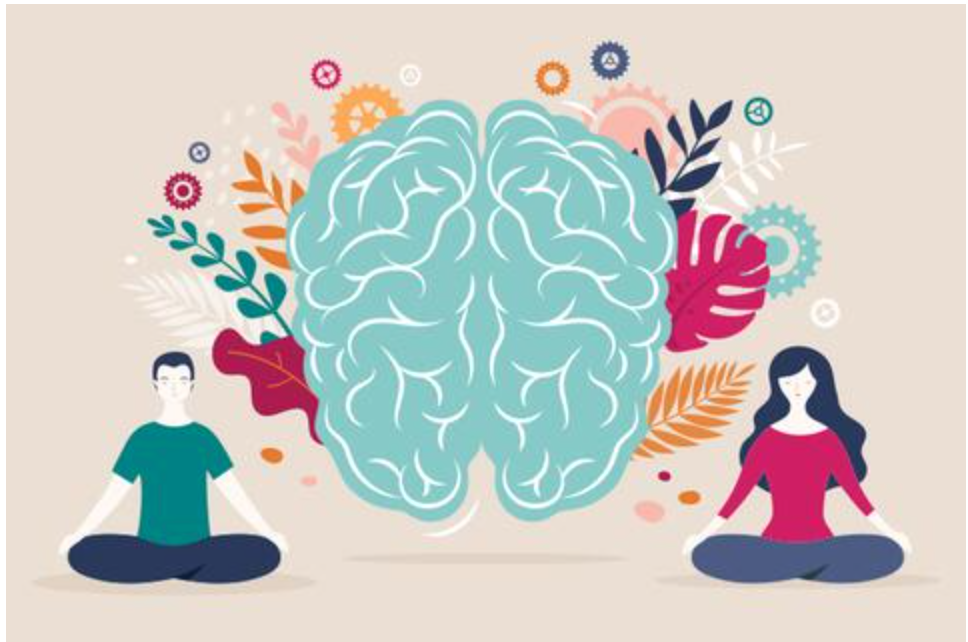
In the intricate dance of neurons and neurotransmitters that govern human thought and emotion, the practice of yoga and meditation emerges as a quiet but profound revolution. Far from being mere exercises in relaxation, these ancient disciplines offer tangible psychological benefits, with growing scientific evidence revealing their transformative effects on the brain’s structure and function. By fostering neuroplasticity, reducing stress, and enhancing emotional regulation, yoga and meditation serve as powerful tools for mental resilience and cognitive enhancement.
Neuroplasticity: Rewiring the Mind
Yoga and meditation are increasingly recognized for their ability to promote neuroplasticity—the brain’s capacity to reorganize itself by forming new neural connections. A landmark study by Hölzel et al. (2011) demonstrated that mindfulness meditation can increase gray matter density in brain regions associated with learning, memory, and emotional regulation, including the hippocampus and prefrontal cortex. These structural changes underscore the brain’s adaptability in response to consistent contemplative practices.
Similarly, yoga’s combination of physical postures, breath control, and focused awareness enhances connectivity between the brain’s default mode network (DMN) and executive control network. This interplay is crucial for self-referential thought, decision-making, and emotional resilience, as shown in research by Gothe et al. (2016). These neural shifts not only bolster mental health but also highlight the brain’s remarkable potential for healing and growth through intentional practice.
Stress, a pervasive challenge in modern life, profoundly impacts the hypothalamic-pituitary-adrenal (HPA) axis, the body’s primary stress-response system. Chronic activation of the HPA axis can lead to dysregulation, contributing to anxiety, depression, and cognitive decline. Yoga and meditation mitigate these effects by downregulating the HPA axis, reducing cortisol levels, and enhancing parasympathetic nervous system activity.
Research by Pascoe et al. (2017) highlights the efficacy of yoga and meditation in lowering biomarkers of stress, including cortisol and inflammatory cytokines. These practices activate the vagus nerve, a key component of the parasympathetic system, fostering a state of relaxation and improving the brain’s ability to recover from stress. Over time, regular engagement in these disciplines rewires the stress response, making individuals more resilient to external pressures and less prone to the adverse effects of chronic stress.
Yoga and meditation also enhance emotional regulation by strengthening the brain’s prefrontal cortex and modulating activity in the amygdala, the brain’s fear center. A study by Zeidan et al. (2011) found that even brief mindfulness meditation reduces amygdala activation in response to emotional stimuli, facilitating a more balanced emotional response. This dynamic interplay fosters a sense of calm and improves an individual’s ability to navigate life’s challenges with equanimity.
Moreover, yoga’s emphasis on interoception—the awareness of internal bodily states—cultivates a deeper connection between the body and mind. This heightened interoceptive awareness improves emotional insight and fosters self-compassion, key components of psychological well-being. As individuals learn to attune to their bodily signals, they develop greater agency over their emotional states, enabling more adaptive responses to stress and adversity.
The cognitive benefits of yoga and meditation extend beyond stress reduction and emotional balance. These practices improve attention, memory, and executive function by enhancing neural efficiency and synaptic plasticity. A meta-analysis by Fox et al. (2016) reported significant improvements in attentional control and working memory among long-term meditators, attributed to increased connectivity within the frontoparietal network. These changes are particularly relevant in an age where distractions abound, offering a pathway to sustained focus and mental clarity.
Yoga’s integration of movement and breath further bolsters cognitive performance by stimulating the cerebellum and motor cortex, areas involved in coordination, balance, and procedural learning. Gothe and McAuley (2015) demonstrated that regular yoga practice improves cognitive flexibility and task-switching abilities, underscoring its potential as a holistic cognitive enhancer. This integration of physical and mental effort trains the brain to process information more efficiently, enhancing overall mental agility.
The psychological benefits of yoga and meditation reflect a remarkable synergy between ancient wisdom and modern neuroscience. By harmonizing the mind and body, these practices offer a refuge from the relentless demands of contemporary life while fostering resilience and cognitive vitality. They invite a holistic perspective on mental health, one that values prevention and long-term well-being alongside treatment.
Furthermore, these practices carry the potential to reshape societal approaches to mental health care, providing accessible and cost-effective solutions for a range of psychological challenges. As research continues to unravel the intricate mechanisms underlying their effects, yoga and meditation stand poised to redefine our understanding of human potential and mental flourishing.
References:
- Hölzel, B. K., et al. (2011). Mindfulness practice leads to increases in regional brain gray matter density. Psychiatry Research: Neuroimaging, 191(1), 36-43.
- Gothe, N. P., et al. (2016). Yoga practice improves executive function by attenuating stress levels. Psychoneuroendocrinology, 63, 87-95.
- Pascoe, M. C., et al. (2017). Yoga, mindfulness-based stress reduction, and stress-related physiological measures: A meta-analysis. Psychoneuroendocrinology, 86, 152-168.
- Zeidan, F., et al. (2011). Mindfulness meditation improves cognition: Evidence of brief mental training. Consciousness and Cognition, 19(2), 597-605.
- Fox, K. C. R., et al. (2016). Is meditation associated with altered brain structure? A systematic review and meta-analysis of morphometric neuroimaging in meditation practitioners. Neuroscience & Biobehavioral Reviews, 65, 1-18.
- Gothe, N. P., & McAuley, E. (2015). Yoga and cognition: A meta-analysis of chronic and acute effects. Psychosomatic Medicine, 77(7), 784-797.
