
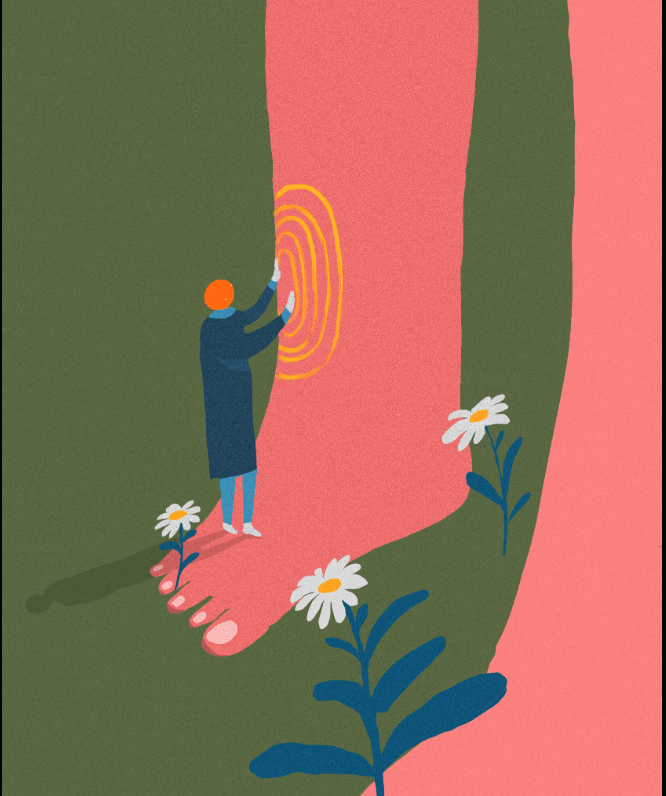
In the ever-evolving field of mental health, therapies that integrate the mind and body are gaining recognition for their efficacy in treating trauma, anxiety, and stress-related disorders. Among these, somatic therapy and Emotional Freedom Techniques (EFT), commonly known as tapping therapy, stand out as transformative approaches. Both modalities emphasize the interconnectedness of physiological and psychological states, offering unique pathways to healing by addressing the body’s role in emotional well-being.
Somatic therapy is grounded in the understanding that trauma and emotional distress are not solely psychological phenomena but are also stored within the body. Pioneered by practitioners such as Peter Levine, this approach draws on concepts from neuroscience, psychology, and bodywork to help individuals process unresolved trauma. Levine’s seminal work, Waking the Tiger: Healing Trauma, highlights how the body’s natural mechanisms for processing stress can be disrupted by overwhelming experiences, leading to chronic physical and emotional symptoms (Levine, 1997).
Clinical research supports the efficacy of somatic therapy in reducing symptoms of post-traumatic stress disorder (PTSD). A study by Langmuir et al. (2012) demonstrated significant reductions in PTSD symptoms among individuals undergoing somatic experiencing therapy. By focusing on bodily sensations, clients can release pent-up energy and restore a sense of safety and regulation.
Somatic therapy’s emphasis on the body’s wisdom aligns with findings in polyvagal theory, which explores how the vagus nerve governs the stress response. Engaging in practices that enhance vagal tone, such as deep breathing or gentle movement, can help recalibrate the nervous system, fostering resilience and emotional stability (Porges, 2011).
Tapping therapy, or EFT, is another holistic intervention that bridges the gap between mind and body. Developed by Gary Craig in the 1990s, EFT involves tapping on specific acupressure points while verbalizing emotional concerns. This combination of cognitive reframing and physical stimulation aims to disrupt maladaptive emotional patterns and restore balance within the body’s energy system.
Studies have shown promising results for EFT in treating anxiety, depression, and PTSD. A randomized controlled trial conducted by Church et al. (2013) found that EFT significantly reduced cortisol levels, a biomarker of stress, following a single session. Participants also reported immediate improvements in emotional well-being, suggesting that tapping can provide rapid relief from distressing symptoms.
EFT’s mechanism of action is still under investigation, but some researchers propose that it may work by modulating activity in the amygdala and hippocampus, brain regions involved in emotional regulation and memory processing. Feinstein (2019) posits that EFT’s tactile stimulation may desensitize conditioned responses to trauma, enabling clients to reframe negative beliefs and experiences.
Both somatic and tapping therapies challenge the traditional dichotomy between physical and mental health by emphasizing their interdependence. These approaches align with a growing body of evidence suggesting that unresolved trauma manifests not only as psychological symptoms but also as physical ailments, such as chronic pain, gastrointestinal disturbances, and cardiovascular issues (Van der Kolk, 2014).
Holistic therapies like these offer an accessible and non-invasive alternative to conventional treatments, particularly for individuals who may be resistant to talk treatment or pharmacological interventions. The embodied nature of somatic therapy and EFT fosters a sense of agency, empowering clients to participate actively in their healing process.
Despite their growing popularity, somatic and tapping therapies require further research to fully elucidate their mechanisms and optimize their application. Critics argue that the subjective nature of these therapies can complicate standardization and measurement, underscoring the need for rigorous clinical trials. Nevertheless, preliminary findings are encouraging, pointing to their potential as complementary tools in mental health care.
As mental health practitioners and researchers continue to explore the interface between mind and body, therapies that honor this connection are likely to gain traction. By addressing the root causes of distress at both a physiological and psychological level, somatic therapy and EFT represent a paradigm shift in how we approach mental well-being.
References:
- Levine, P. A. (1997). Waking the Tiger: Healing Trauma. North Atlantic Books.
- Langmuir, J. I., Kirsch, B. A., & Classen, C. C. (2012). Somatic experiencing for PTSD: Results from a pilot study. Traumatology, 18(3), 3-10.
- Porges, S. W. (2011). The Polyvagal Theory: Neurophysiological Foundations of Emotions, Attachment, Communication, and Self-regulation. W.W. Norton & Company.
- Church, D., Yount, G., & Brooks, A. J. (2013). The effect of Emotional Freedom techniques on stress biochemistry: A randomized controlled trial. Journal of Nervous and Mental Disease, 201(2), 146-152.
- Feinstein, D. (2019). Energy psychology: Efficacy, Speed, Mechanisms. Explore, 15(6), 340-351.
- Van der Kolk, B. A. (2014). The Body Keeps the Score: Brain, Mind, and Body in the Healing of Trauma. Viking.
- Craig, G. (1993). The EFT Manual. Energy Psychology Press.
- Clond, M. (2016). Emotional Freedom Techniques for Anxiety: A systematic review with meta-analysis. Journal of Nervous and Mental Disease, 204(5), 388-395.
- Ogden, P., Minton, K., & Pain, C. (2006). Trauma and the Body: A Sensorimotor Approach to Psychotherapy. W.W. Norton & Company.
Write something…
