
Unlocking Sound and Speech: Cochlear Implant for Deaf & Mute Children
Did you know surgery could help deaf and mute children?
Working in the E.N.T. department in government hospitals, I saw a lot of children and adults who were deaf and mute. The lack of communication makes their lives very difficult. Many such cases never hear or speak, just because of lack of awareness about the medical solutions. Although their natural hearing cannot be restored completely, the communication barriers could be broken.
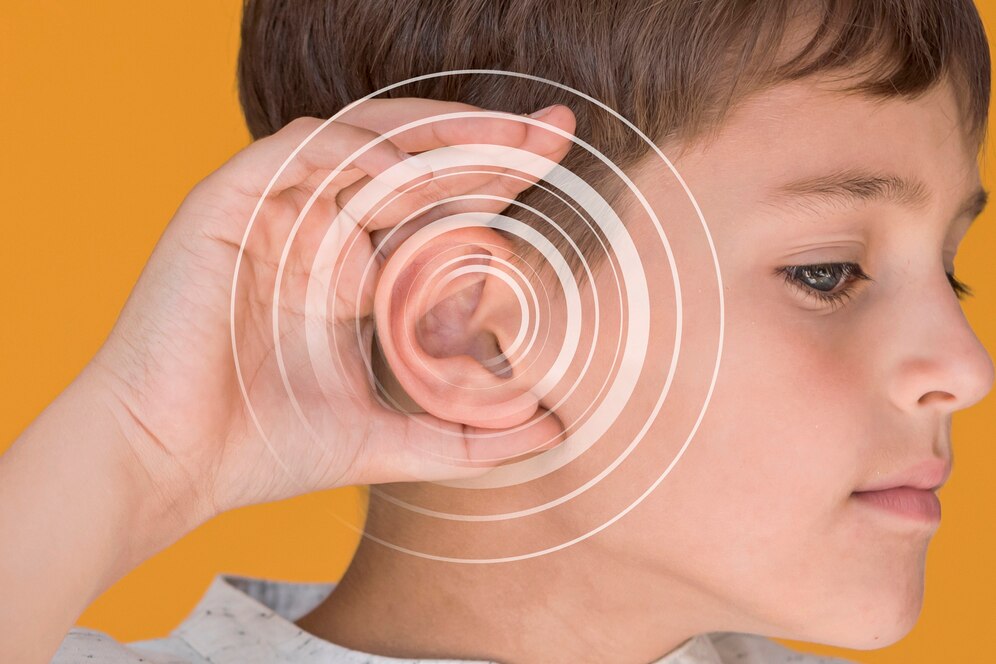
Childhood deafness- reasons and consequences:
Different factors related to maternal and child health can affect a child’s hearing. Ototoxic medicines (which damage the inner ear), injuries, some viral infections, genetics, some diseases during pregnancy, etc can lead to deafness at birth. These can affect the external, middle, inner ear, or a combination of ear parts. The structural deformities can be corrected with surgery in many cases, especially if they affect the external or middle ear. However, deformities of the inner ear can be difficult to treat.
Hearing is an important sense of communication, sensing danger, and general awareness of surroundings. As the development of speaking and language depends on the sense of hearing, therefore, children who cannot hear at all or with negligible hearing do not learn to speak. So, life can be difficult for children and adults with hearing and speaking difficulties.
Cochlear Implant:
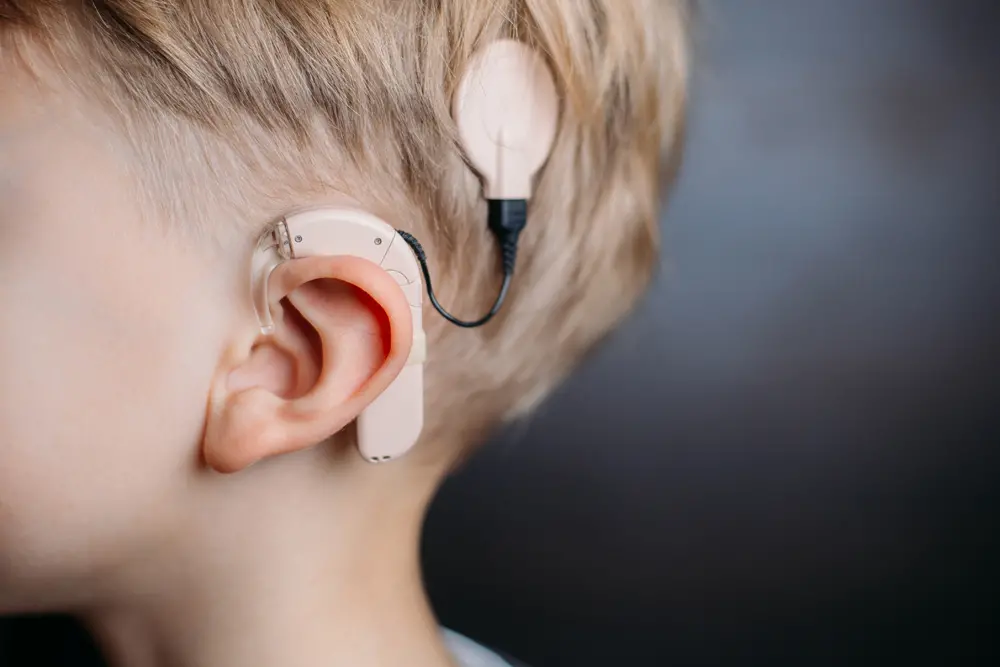
It is a device surgically placed in the inner ear of children with no or negligible sense of hearing to help them gain the sense of hearing. It has an inner component which is placed inside and is not visible externally, and an outer component which can be worn behind the ear. It has specific requirements, like the presence of a cochlear nerve, which connects the inner ear to the brain. The surgery to place this neuro-prosthesis is performed under general anesthesia. Before this surgery, many tests are done to assess the hearing, the structure of the ears, presence of any other diseases.
With this device, it is possible to achieve satisfactory hearing and communication. The earlier this surgery is done, the higher the possibility of language and vocal development. Follow-up after surgery plays an important role in successful language development. It is necessary to provide proper hearing stimuli, speech and language training, and a supportive environment to the children. Parents require guidance and support while going through this journey, to help in the development of their child’s communication skills.
What if a cochlear implant cannot be placed?
As there are specific structural prerequisites for cochlear implants, not all cases can be helped with these. In such cases, other solutions like hearing aids can be used. There are various types of hearing aids, which can be used according to the condition and hearing of the patient. They can also benefit from learning sign language, lip reading, writing, etc.
What can we do?
Not many people know about solutions like cochlear implant for deaf & mute children, despite being developed for a long time. This lack of information leaves many deaf children untreated. Spreading the word about this medical innovation can help them get tested and helped appropriately. You can help these children, the medical society, and your government by talking about these solutions to more and more people.
