
Bone Anchored Hearing Aid and Implant Solutions

What happens if someone has a type of hearing loss that is not helped by a traditional hearing aid or a cochlear implant? The answer: bone conduction.
How does a bone conduction solution work?
Bone conduction devices are currently made by two manufacturers: Cochlear Americas and Oticon Medical. Similar to a traditional hearing aid, sound is picked up by microphones and sent through an amplifier, but instead of sending sound into the ear canal through a receiver, the hearing aid uses vibration to send the signal to the hearing nerve. These types of hearing aids rest on the skull, and are best for conductive or mixed hearing losses, as well as chronic infections or draining ears because they bypass the outer and middle ears, sending the sound straight to the inner ear. This technology can also be used for single-sided deafness (SSD), which means that someone has one non-functioning or deaf ear. The hearing aid uses skull vibration to transmit sound to the nerve, so in the case of an asymmetrical hearing loss or SSD, the hearing aid is placed on the worse or deaf side, and the sound will then be transmitted to the better nerve. While this does not restore hearing on the “bad” side, it can improve sound awareness as sounds will be amplified from the poorer side.
Types of bone conduction hearing aids
A bone anchored hearing aid, or BAHA, is exactly as it sounds: a hearing aid that is literally anchored into the bone of the skull. This typically requires a surgery which is performed by an Otolaryngologist or Otologist, also known as an Ear, Nose, and Throat physician (ENT). However, there are both surgical and non-surgical options for using a BAHA.

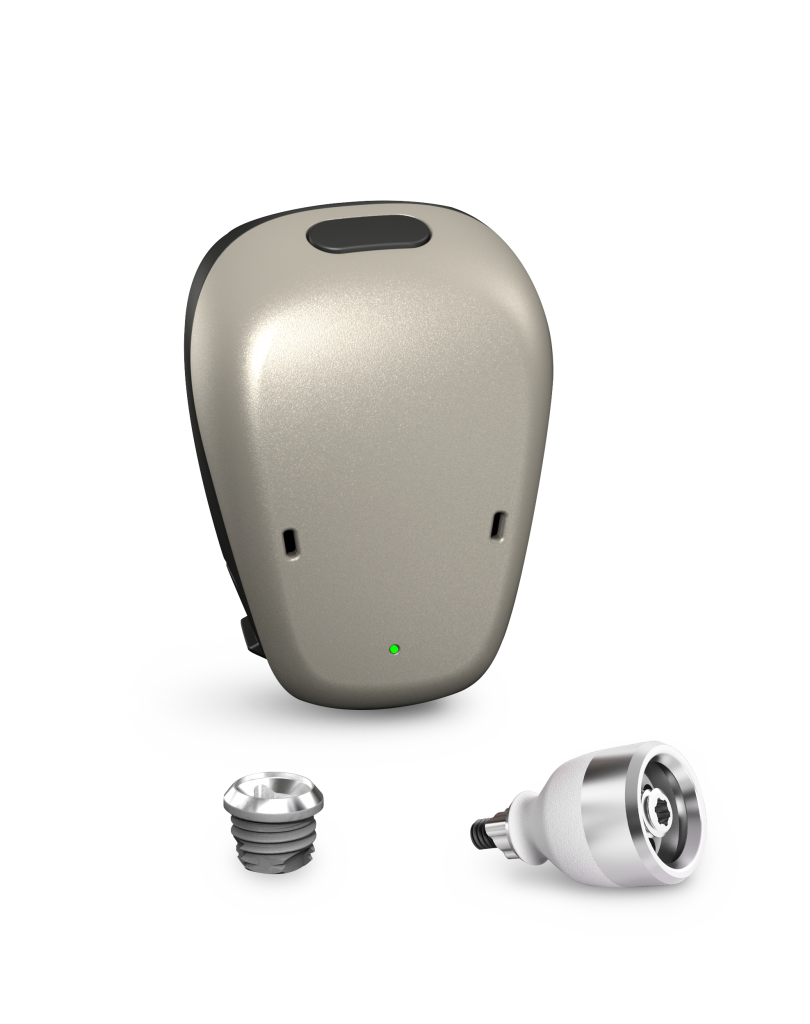
During surgery, a screw is inserted into the skull behind the ear. A post, called an abutment, inserts into the screw and also protrudes through the skin, acting as a bridge between the screw and the outer device, called the processor. The processor will then snap on and off the abutment. Similar to a traditional hearing aid, a BAHA is taken off around water and for sleeping.
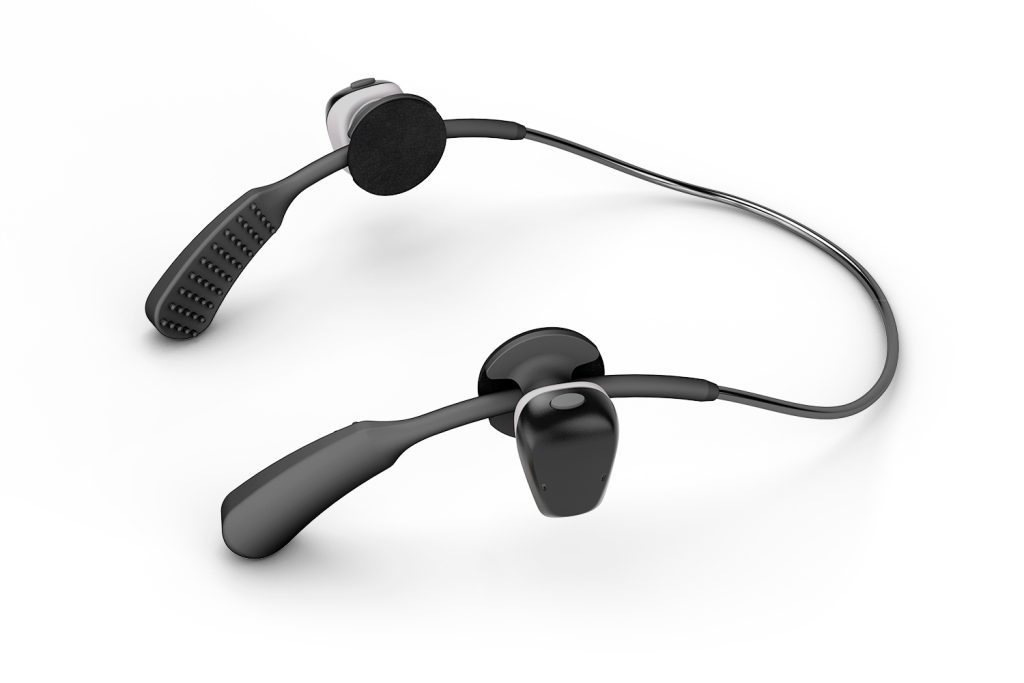

If a non-surgical option is preferred or required, the BAHA processor can be snapped onto a Soundarc (right) or a Softband (left) that can be worn on the head.
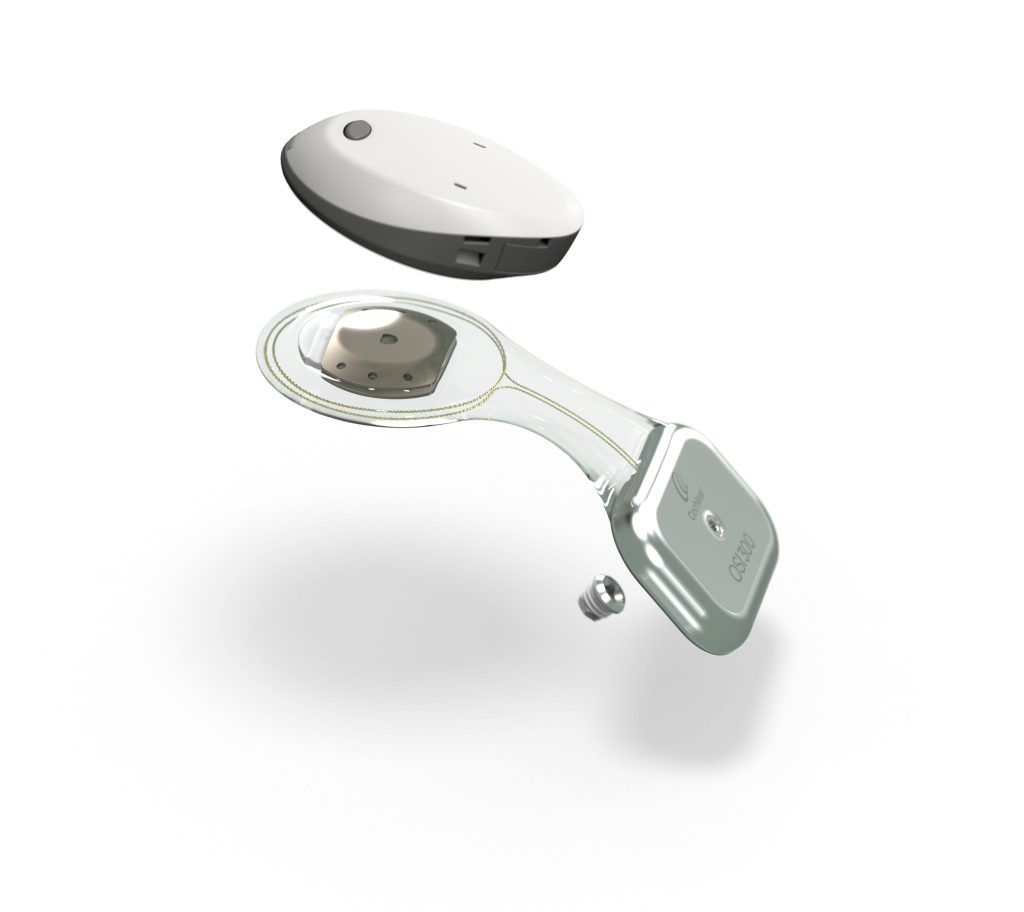
Another surgical option, which was more recently developed and is gaining popularity, are implantable devices called Osia (Cochlear) and Sentio (Oticon). Similar to a BAHA, these devices have an internal portion implanted into the skull behind the ear, and use vibration to amplify sound. Unlike a BAHA, there is no abutment to bridge the internal device to the external processor. Instead, a magnet is inserted and remains completely beneath the skin. The processor also has a magnet, which will connect the internal and external portions and allow them to work together.
With so many options available and continued advancements in hearing technology, more and more people have the opportunity to rediscover the world of sound and enjoy a clearer connection to life.
*Images courtesy of Cochlear Americas
