
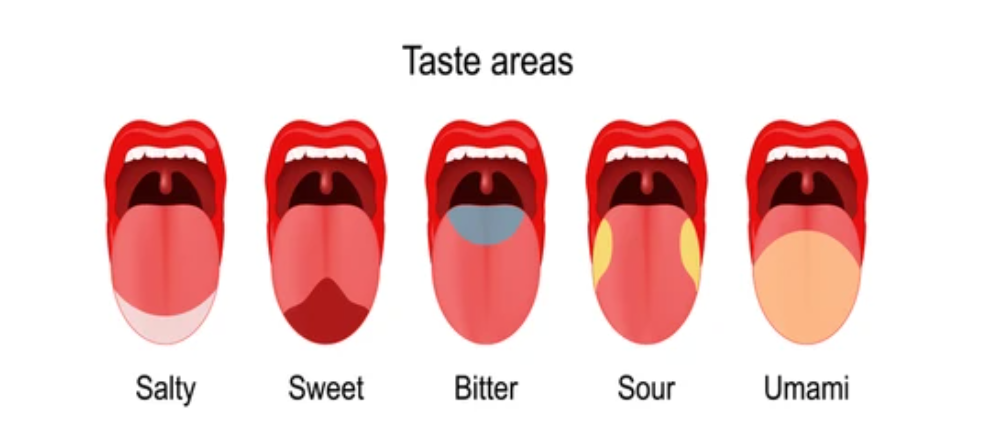
Taste is more than just a sensation—it is an intricate dance between biology, psychology, and experience, guiding our food preferences and dietary habits. While taste buds are often reduced to the basic five flavors—sweet, sour, salty, bitter, and umami—their function is far more complex. They are dynamic, ever-changing sensors that influence our cravings, aversions, and even emotional well-being. But why do we favor certain flavors over others, and how can we bring balance to our taste perception?
Taste buds are clusters of receptor cells located on the tongue, soft palate, and even the gut, each designed to detect specific chemical compounds in food. The perception of flavor, however, is a multisensory experience. The olfactory system contributes significantly, allowing us to distinguish nuanced flavors beyond the basic five. When you have a cold, for example, food tastes bland because the olfactory receptors are compromised (Stevenson, 2009). The trigeminal nerve also plays a role, detecting spice and temperature, which explains why some people relish fiery chili peppers while others avoid them.
Genetics play a critical role in taste preferences. Variations in the TAS2R38 gene influence our perception of bitterness, making some people more sensitive to bitter compounds in foods like Brussels sprouts and coffee (Kim et al., 2003). This biological predisposition can determine whether a person enjoys or dislikes specific foods from an early age. However, taste preferences are not entirely fixed—environment, culture, and psychological factors shape how we experience flavors over time.
The human palate is remarkably adaptable, capable of recalibrating based on diet and exposure. Taste buds regenerate approximately every two weeks, meaning that repeated exposure to certain flavors can gradually alter preferences (Beauchamp & Mennella, 2009). For those struggling with sugar cravings, gradually reducing sugar intake can shift perception over time, making naturally sweet foods like fruit more satisfying. Similarly, increasing exposure to bitter greens can help desensitize bitterness sensitivity, making these foods more palatable.
Another factor influencing taste balance is gut microbiota. Recent research suggests that gut bacteria can influence food cravings by modulating taste receptor sensitivity (Mason et al., 2018). A diet rich in whole foods and diverse nutrients supports a balanced gut microbiome, which may, in turn, promote a more balanced perception of taste. Mindful eating practices, such as slowing down during meals and savoring flavors, can also help reset taste preferences by enhancing awareness of subtle flavor nuances (Spence et al., 2015).
Taste is deeply intertwined with emotions and memories. Sweet flavors, for instance, are often associated with comfort and reward, as sugar stimulates dopamine release, triggering pleasure responses in the brain (Avena et al., 2008). This connection explains why many turn to sweets during times of stress or sadness. On the other hand, salty foods can be linked to evolutionary survival, as sodium is essential for maintaining bodily functions, leading to a natural preference for salty flavors (Breslin & Beauchamp, 1997).
Cultural and childhood influences also shape taste preferences. If a person grows up in an environment where spicy foods are common, they are more likely to enjoy and tolerate heat in food. Conversely, individuals with minimal exposure to spice may find even mild chili peppers overwhelming. Psychological conditioning further plays a role—if a certain food is associated with a positive experience, individuals are more likely to seek out that flavor again, reinforcing the preference over time.
The Impact of Modern Diets on Taste Perception
In the modern food landscape, processed foods high in sugar, salt, and artificial flavors can alter taste bud sensitivity. Excessive consumption of these foods may dull the perception of natural flavors, making whole foods seem bland in comparison (Monroe et al., 2016). This shift in taste perception can contribute to unhealthy eating habits, making it crucial to retrain the palate by gradually reducing processed food intake and reintroducing natural, nutrient-dense foods.
Additionally, taste preferences can be influenced by hormonal fluctuations. Studies suggest that pregnancy, menstrual cycles, and even stress-related cortisol spikes can temporarily alter taste perception, leading to unusual cravings or aversions (Drewnowski & Bellisle, 2007). Understanding these fluctuations can help individuals navigate dietary changes with greater awareness and balance.
Achieving a balanced palate is not about eliminating cravings but about fostering awareness of how and why we perceive flavors the way we do. Gradual exposure, mindful eating, and a varied diet can enhance taste perception, allowing for a more enjoyable and health-conscious relationship with food. Understanding the interplay between biology, psychology, and environment helps us make informed dietary choices, ensuring that the flavors we crave align with both pleasure and well-being.
In the end, we all have unique tastes, so embrace them. Don’t try to be like others—celebrate what makes your palate uniquely yours.
References
- Avena, N. M., Rada, P., & Hoebel, B. G. (2008). Evidence for sugar addiction: Behavioral and neurochemical effects of intermittent, excessive sugar intake. Neuroscience & Biobehavioral Reviews, 32(1), 20-39.
- Beauchamp, G. K., & Mennella, J. A. (2009). Early flavor learning and its impact on later feeding behavior. Journal of Pediatric Gastroenterology and Nutrition, 48(Suppl 1), S25-S30.
- Breslin, P. A., & Beauchamp, G. K. (1997). Salt enhances flavor by suppressing bitterness. Nature, 387(6633), 563.
- Drewnowski, A., & Bellisle, F. (2007). Liquid calories, sugar, and body weight. American Journal of Clinical Nutrition, 85(3), 651-661.
- Kim, U. K., Wooding, S., Ricci, D., Jorde, L. B., & Drayna, D. (2003). Genetics of bitter taste sensitivity to 6-n-propylthiouracil (PROP). Human Molecular Genetics, 12(12), 1361-1366.
- Mason, B. L., Li, Q., & Moran, T. H. (2018). Cross-talk between gut microbiota and taste receptors: Implications for feeding behavior. Frontiers in Neuroscience, 12, 800.
- Monroe, J. T., Storsve, A. B., & Green, B. G. (2016). Oral sensory influences on dietary preferences and habits. Appetite, 105, 639-648.
- Spence, C., Velasco, C., & Knoeferle, K. (2015). A large sample study on the influence of the multisensory environment on the taste of food. Food Quality and Preference, 39, 136-141.
- Stevenson, R. J. (2009). The psychology of flavor. Oxford University Press.
