
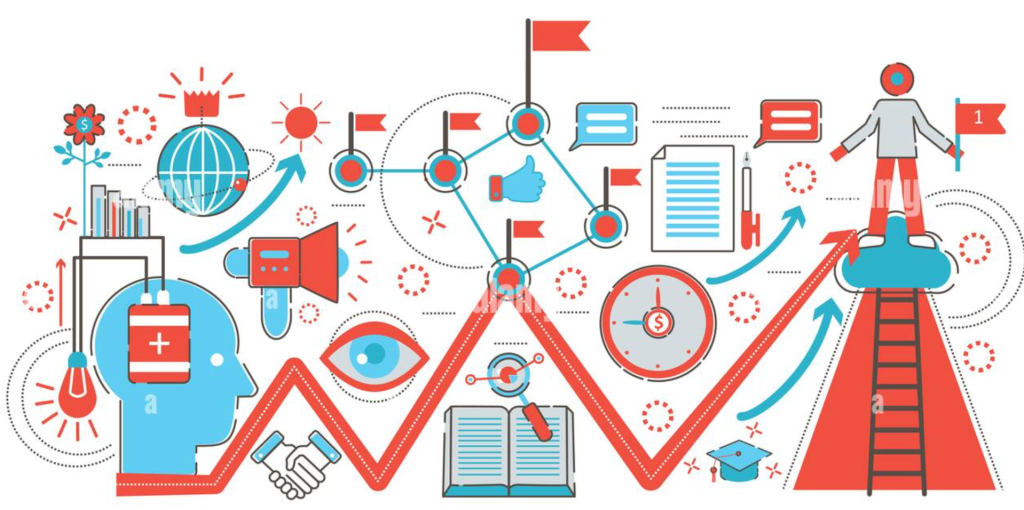
The idea of the self-made person is deeply embedded in Western culture, particularly in the United States, where narratives of individuals rising from obscurity to prominence are revered. Figures like Steve Jobs, Oprah Winfrey, and Elon Musk are frequently cited as examples of success achieved through grit, intelligence, and relentless ambition. However, this belief system often ignores the significant roles of privilege, community, and mental health in shaping a person’s trajectory. Success is rarely an isolated endeavor, and systemic factors play an undeniable role in providing some individuals with advantages while leaving others at a disadvantage.
The Role of Privilege in Success
Privilege manifests in multiple forms, including socioeconomic status, race, gender, and access to education. These systemic advantages create disparities in opportunities that significantly impact an individual’s ability to succeed. Research has shown that children born into wealthier families have better educational opportunities, greater access to mentorship, and a financial safety net that allows them to take career risks without the fear of financial ruin (Chetty et al., 2014). The myth of the self-made person often downplays these advantages, implying that success is purely meritocratic when, in reality, it is often contingent on the circumstances of one’s birth.
A study published in the American Economic Review highlights that intergenerational mobility—the likelihood of moving up the economic ladder compared to one’s parents—is heavily influenced by factors such as neighborhood resources, school quality, and social capital (Chetty & Hendren, 2018). Individuals who grow up in underprivileged environments face greater obstacles, not due to a lack of work ethic, but due to systemic barriers that make upward mobility more challenging.
Hustle culture, characterized by an obsessive commitment to work and productivity, has been glorified in modern society. While ambition and dedication are valuable traits, an excessive focus on work can lead to burnout, anxiety, and depression. The American Psychological Association (APA) has documented the detrimental effects of chronic overwork, noting that long work hours and stress contribute to higher rates of cardiovascular disease, weakened immune systems, and mental health disorders (APA, 2019).
In addition, the pressure to achieve self-made success can lead to impostor syndrome, a psychological phenomenon where individuals doubt their accomplishments and fear being exposed as frauds. Studies have shown that high-achieving individuals, particularly those from marginalized backgrounds, often struggle with this syndrome, leading to decreased confidence and increased stress (Clance & Imes, 1978). The paradox of hustle culture is that while it promises success, it often results in diminished well-being and reduced productivity over time.
Success is not an isolated endeavor; it is deeply rooted in community support and social connections. Networking, mentorship, and peer support all play crucial roles in career advancement. Research conducted by Granovetter (1973) on the “strength of weak ties” demonstrates that professional opportunities often arise through casual acquaintances rather than close friends or family. This finding underscores the importance of social capital in achieving success.
Moreover, collectivist societies—such as those in many parts of Asia, Africa, and Latin America—emphasize interdependence and community support over individualism. Studies comparing Western and Eastern perceptions of success indicate that individuals in collectivist cultures experience lower levels of stress related to career achievement, as communal values provide a buffer against the pressures of self-reliance (Markus & Kitayama, 1991). This suggests that a more balanced approach to success—one that acknowledges the role of community—could lead to better mental health outcomes.
Resilience is often touted as the key to overcoming adversity, but psychological resilience alone cannot negate systemic inequities. While factors like optimism, adaptability, and emotional regulation contribute to success, they must be understood within the broader context of privilege and social support (Luthar et al., 2000). A person experiencing poverty or discrimination may develop resilience but still struggle against institutional barriers that limit their opportunities.
Mental health challenges such as anxiety, depression, and trauma can further impact one’s ability to achieve success. The World Health Organization (WHO) reports that mental disorders are among the leading causes of disability worldwide, affecting productivity and economic stability (WHO, 2020). Yet, the myth of the self-made individual often disregards these challenges, framing success as purely a matter of willpower rather than recognizing the need for accessible mental health resources and societal support.
Rather than perpetuating the myth that success is solely the result of individual effort, it is crucial to acknowledge the multifaceted factors that shape achievement. Recognizing privilege, fostering supportive communities, and addressing mental health disparities are essential steps in creating a more equitable society. By shifting the narrative away from extreme self-reliance, we can cultivate a culture that values collaboration, mental well-being, and systemic change.
If you find yourself struggling with the pressures of success, dealing with burnout, or grappling with impostor syndrome, consider booking a session with us on themedalien.com. Our team of professionals is here to support you in navigating the complexities of personal and professional growth while prioritizing your mental health.
References
- American Psychological Association. (2019). Stress in America: Paying with our health.
- Chetty, R., Hendren, N. (2018). The impacts of neighborhoods on intergenerational mobility. American Economic Review.
- Clance, P. R., & Imes, S. A. (1978). The impostor phenomenon in high-achieving women: Dynamics and therapeutic intervention. Psychotherapy: Theory, Research & Practice.
- Granovetter, M. S. (1973). The strength of weak ties. American Journal of Sociology.
- Luthar, S. S., Cicchetti, D., & Becker, B. (2000). The construct of resilience: A critical evaluation and guidelines for future work. Child Development.
- Markus, H. R., & Kitayama, S. (1991). Culture and the self: Implications for cognition, emotion, and motivation. Psychological Review.
- World Health Organization. (2020). Mental health and well-being at the workplace.
