
Overview:
India is a country with large population where noncommunicable diseases are increasing in trend. Among these noncommunicable diseases, mental illness is rapidly emerging. Most of the Indian poppulation is suffering from different kind of mental condition like anxiety, depression, schizophrenia, bipolar disorders etc. Not only adults but children are also facing challenges for mental health like ADHD, autism, depression, anxiety, etc. Among them, autism in children is becoming more common, which requires close attention.
Introduction:
Autism is a neurodevelopmental disorder in which a child’s social interaction and communication are impaired, and the child develops restricted and repetitive behaviour.
Poor social interaction means a child doesn’t get involved with other children of the same age group.
Poor communication means a child doesn’t use verbal language to communicate. Child never makes eye contact, even with parents.
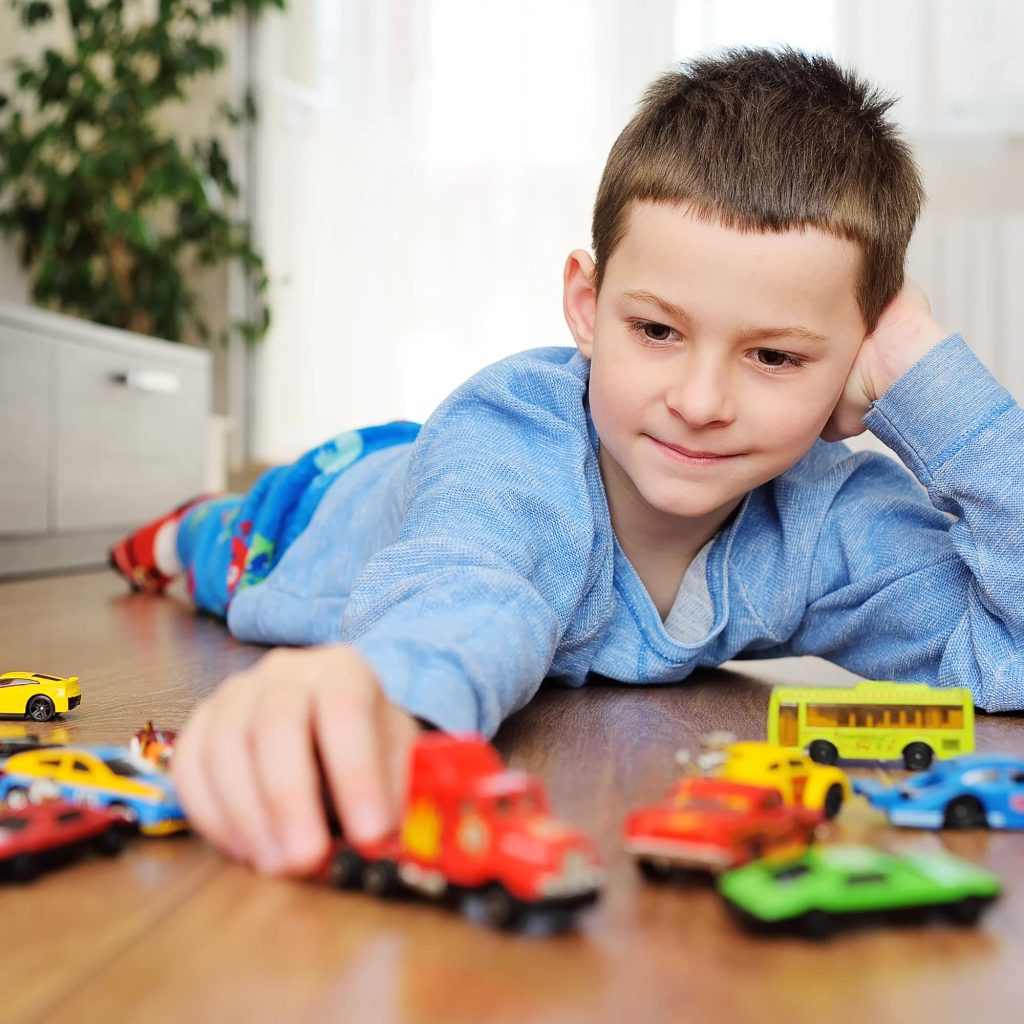
Repetitive behaviour means the child will remain engaged in one kind of activity only. Example: He will keep using mobile or keep playing with his one toy only.
Restricted behaviour means the child doesn’t want to change his routine and follow it very strictly. On bringing any change in routine, the child shows negative reaction or emotional outburst.
This will give rise to many problems related to normal social and cognitive development of a child, and it will make the child completely dependent on his caregiver.
Etiology:
The etiology behind it is not fully understood.
Some hereditary and genetic causes have been identified. Some theories say it’s because of faulty development of the brain or an imbalance between brain neurotransmitters. There is some evidence that can be linked to autism, like maternal poor nutrition during pregnancy, maternal infection during pregnancy, or advanced maternal age.
Autism can bring devastating changes to children’s lives, but it can be solved with early intervention by autism therapy.
Goal of therapy:
The goal of this therapy is to connect the child to society, help him to achieve normal social, language, and academic milestones, and make the child independent for his routine activity.
Every autistic child has unique problems and unique abilities. So therapy should be tailored for every child, and it should be used in combination.
Types of therapy:
1) Behavioral therapy
Most commonly used Behavioral therapy is applied behavioral therapy. In which one activity is it divided into small tasks. Like if a therapist wants to teach the child how to brush teeth, then break it into small tasks. Example: how to hold a toothbrush, how to bring it near the mouth, how to brush teeth.
After each successful task, a child should be rewarded with praise or a sticker or toy.

2) Speech and language therapy
In which child is shown different pictures, like water, fruits, and a bathroom. If a child wants to drink water, then the child is taught to point out towards a picture of water. It will gradually build up confidence in the child that he can do communication. Child is also taught how to pronounce each word slowly.
3) Sensory stimulation therapy
A child with autism is hypersensitive towards some sensory stimulation, like loud noise or rapid body movements. On loud noises, the child becomes irritable, and on rapid body movement, the child develops vertigo because of hypersensitivity to vestibular stimulation. This child is made to sit on a swing so his vestibular reflex can be matured rapidly.
4) Developmental therapy
The child is given floor time to play with toys, and parents also participate in it.
5) Cognitive behavioral therapy
A child with autism has many fears, like he fears crowds or bright lights.Then he is exposed to this situation gradually, and he is taught how to handle the situation, like he can take a deep breath or he can close his eyes.
6) Occupational therapy
In which child is trained to do routine activities like how to button the shirt or how to put on socks. It will make the child independent for his routine work.
7) Play therapy
In which child is allowed to play with same-age group children. He is taught how to play with other children, how to share toys, and how to do team work.
8) Parent-mediated therapy
In which any family member close to the child is trained to give this therapy at home only.
9) Medical therapy
In which case, he should be put on medical therapy to reduce irritability or depression and calm his mind.
Challenges during therapy:
Family and society supports is neccessary . Duration of therapy is longer and expensive also. So it can increase financial burden on family. To achieve maximum result patience is required from parental side.
Conclusion:
Autism in children is emerging mental health problem and it can be cured by autism therapy which requires friends , family and society support.
References:
1.American Psychiatric Association. Diagnostic and Statistical Manual of Mental Disorders. 4. Text Revision. Washington, DC: American Psychiatric Association; 2000. [Google Scholar]
2.American Psychiatric Association. Diagnostic and Statistical Manual of Mental Disorders. Fifth. Arlington, VA: American Psychiatric Publishing; 2013. [Google Scholar]
3.Lai MC, Lombardo MV, Baron-Cohen S Autism. The Lancet. 2014;383:896–910. doi: 10.1016/S0140-6736(13)61539-1
