
Rechargeability, Bluetooth, and AI
Did you know that there is more to hearing aids than just amplifying sound? While providing the ability to hear is the main and most important purpose of a hearing aid, there have been recent advancements that have taken hearing aid technology above and beyond.
Rechargeability
Almost all hearing aids now come standard with rechargeable batteries. In most cases, the battery is entirely encased and inaccessible by both the hearing aid wearer and hearing healthcare professional. Because of this, hearing aids are much more moisture-resistant than they have been in the past. When purchased, the hearing aid(s) will come with a charging case, cord and plug. Similar to a cell phone, the aids will be charged overnight while the user is sleeping, as hearing aids are not typically slept in. These rechargeable batteries have an average life of 3-4 years. Since the battery is completely encased it is now possible to make the devices completely waterproof, however the batteries can only be replaced by sending the aids to the manufacturer. There is one brand, Oticon, whose batteries can be switched out in-office, but these aids are not yet waterproof. As disposable hearing aid batteries have a lifespan of 3-14 days, depending on the size, being able to simply recharge the hearing aids every night provides an increased level of convenience. As previously stated, almost all hearing aids can be rechargeable. However depending on the brand, typically larger super-power and ultra-power behind-the-ear (BTE) hearing aids still use size 13 or size 675 disposable batteries. Since these aids are larger and typically need more power, rechargeable batteries will drain too quickly to be worth using. On the contrary, very small, custom completely-in the-canal (CIC) and invisible-in the-canal (IIC) aids require a small size 10 disposable battery. At this time, the aids are just too small to incorporate all of the components needed for amplification as well as a rechargeable battery. For more details about hearing aid types and sizes, see this article on sound solutions.
Bluetooth

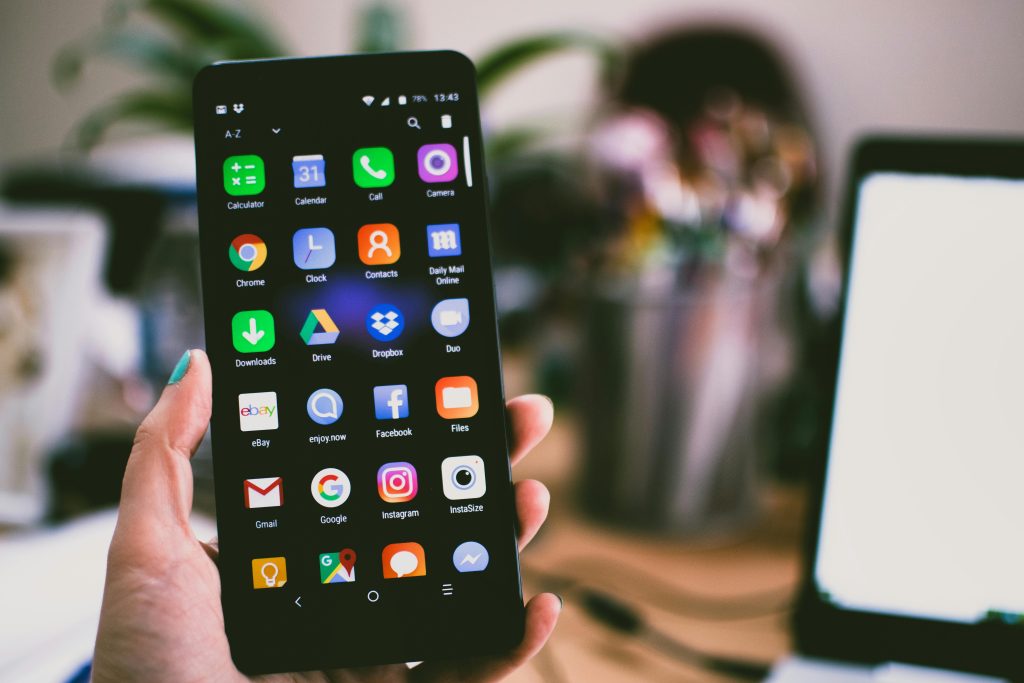
Similar to rechargeability, most hearing aids now also come equipped with Bluetooth technology. In fact, most hearing aids can be both rechargeable and Bluetooth compatible. Each manufacturer has its own app that can be used like a remote control for the hearing aids. With the app, you can change the volume or program, adjust the sound settings, or point the microphones in a particular direction. Features will vary based on the brand and the hearing aid, with some providing more advanced options such as locating lost devices, tracking health and heartrate, and even fall detection capabilities.
Hearing aids can also stream any sound from a phone or tablet. This includes phone calls, music, videos, audiobooks, podcasts and more. Essentially, they are taking the place of Bluetooth earbuds while also tailoring the sound to the wearer’s hearing loss. Smartphone compatibility will vary depending on the type of Bluetooth the hearing aid brand uses: traditional Bluetooth, Audio Streaming for Hearing Aids (ASHA), or made for iPhone protocol. All brands are compatible with iPhone, but they get much pickier when it comes to Android devices. However there is one hearing aid manufacturer, Phonak, that uses traditional Bluetooth and therefore is compatible with any Bluetooth device, regardless of brand. Also similar to rechargeability, the smaller custom style of hearing aids such as CIC and IIC, do not have the ability to pair with a phone. Again, there just isn’t enough room to include all of those electronic components needed for Bluetooth capability.
Artificial Intelligence (AI)
Many hearing aids have AI technology built within them, and have for a number of years. Hearing aids have automatic processing that can automatically change the settings in order to adapt to different environments. Soundscape is constantly changing: from a quiet room, to a car, to a grocery store, restaurant, or gathering. The hearing aids will adapt to these different situations without the user having to manually change their settings. In noisy settings, the aids need to be able to sense important sounds or speech in order to separate them from extraneous background noise. Newer hearing aids are using Deep Neural Networks (DNN) in their processors in order to mimic the way the human brain learns and processes information around them. We are just at the tip of the iceberg when it comes to knowing what AI can do. As advanced as hearing technology already is, as AI evolves, we can only wonder what hearing aids will be able to do next.
