
What They Are, How They Work, and What They Look Like

What are hearing aids?
Hearing aids are programmable, digital devices that can be placed in or behind the ear, in order to amplify sounds according to a person’s individual hearing loss. During a hearing test, thresholds (the very softest someone is able to hear at individual tones) are charted onto a graph called an audiogram. Hearing aids are then programmed to a person’s audiogram, in order to provide amplification of varying degrees based on their specific thresholds.
How do hearing aids work?
Hearing aids have three main parts: a microphone, an amplifier, and a receiver (speaker). Acoustic sound will be picked up by the microphones and convert it to an electrical signal, the amplifier will boost the strength of that signal, and then the amplified sound will be sent into the ear by the receiver. Depending on the size and style of the hearing aids, there may be multiple, directional microphones in order to better interpret where sound is coming from as well as filter background noise. As of now, hearing aids will never work as well as normal hearing. However depending on the technology level of the hearing aid, it has the ability to amplify important speech and separate it from extraneous background noise. Hearing aids will not get rid of background noise completely because the noise still exists, but they will try not to amplify the extra noise when someone close by is speaking.
How do I know if I need hearing aids?
For most people, hearing loss is a very gradual process that can take years for someone to notice. Sometimes a spouse, family, or friend may notice that you are struggling, when you haven’t had difficulty in the past. If you find yourself turning the volume up on the television or telephone, asking others to repeat themselves often, avoiding restaurants or social gatherings because it’s too hard to hear when there’s noise around you, it may be time to have your hearing checked. As we age, we tend to lose higher pitch (frequency) hearing first, although this will vary greatly depending on genetics as well as any history of noise exposure. Higher pitches are sounds that make speech clear, and provide clarity and understanding when someone is speaking. If someone has hearing loss in the higher pitches (even if the low pitches are relatively normal), they may feel that they can hear, just not understand. Or they may feel that the people around them are just mumbling. If any of this sounds familiar, you may have hearing loss.
What do hearing aids look like?
There are many different styles of hearing aids, and recommendations will vary depending on the type and severity of hearing loss, anatomy of the ear, as well as personal preference.

Some hearing aids have a tip that is inserted into the ear canal, with a small wire or tube that will run up the front of the ear to connect to the body of the aid, which sits behind the ear. These aids are called a receiver-in-the-canal (RIC) style (pictured above on the left), or a behind-the-ear (BTE) style. These aids can have a small silicone tip, or dome, that will vary in shape and size depending on the degree of hearing loss and ear size. Custom earpieces can also be added in place of a dome, and are especially useful for severe hearing losses or if someone has a difficult time keeping the aid in their ear.
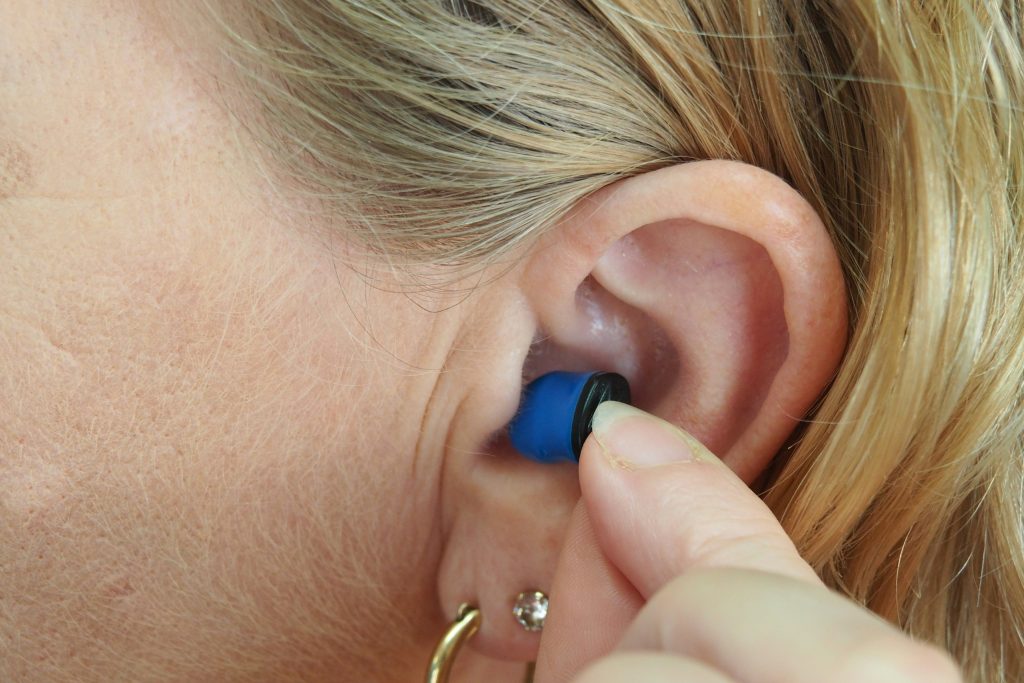
There is also the option of a custom hearing aid. These aids are all one piece, custom molded to individual ears, that is inserted into the ear canal. For this style, nothing goes over and behind the ear, and these hearing aids can be made in different sizes. From smallest to largest, these aids are called invisible-in-the-canal (IIC), completely-in-canal (CIC, pictured above on the right), in-the-canal (ITC), or in-the-ear (ITE). Size options will vary based on the severity of hearing loss, size of ear canal, and preferred technology features such as rechargeability and Bluetooth.
As you can see, hearing aids come in all kinds of different shapes, sizes, and options. Hearing aids are an important tool that can enhance quality of life by improving communication and fostering connections. With advancements in technology and a range of options available, finding the right hearing aid is easier than ever.
