The Use of Brain-Computer Interfaces in the Rehabilitation of Neurological Diseases: Revolutionizing Recovery and Restoring Lives
Around the world, strokes remain the most common cause of functional disability. The demand for stroke survivors’ motor rehabilitation continues to increase as the world’s population grows. Virtual reality (VR) technologies as well as brain computer interfaces (BCIs) for rehabilitation have been the subject of extensive study over the past 10 years, in which researchers aim to use them alongside or instead of more traditional therapies like occupational therapy and physiotherapy. Beyond stroke, other neurological conditions, such as Parkinson’s disease, multiple sclerosis, spinal cord injuries, traumatic brain injuries, and cerebral palsy also create significant rehabilitation challenges. Addressing the varying needs of these patients emphasizes the growing role of biomedical engineering in developing effective treatments for different patients.
Brain-computer interfaces (BCIs) are becoming essential tools for restoring lost motor abilities as rehabilitation demands develop. Overcoming damaged connections between neurons, BCIs allow direct communication between the brain and outside devices. Because it can help patients with neurological problems with mobility, communication, and cognitive training, this technology has captured curiosity of researchers and engineers today.
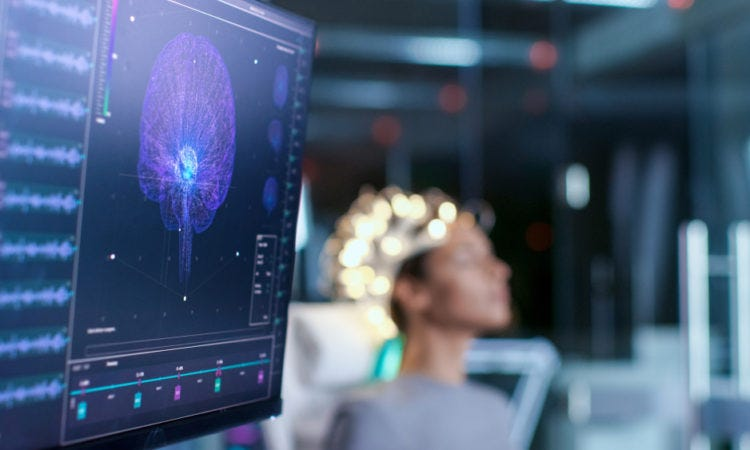
Brain-computer interfaces, abbreviated as BCIs, aim to restore brain function through creating a link between the brain’s internal activities and an external device. These devices are typically computers, prosthetic limbs, or similar assistive technologies. By detecting and translating neural signals from the central nervous system into commands, this advanced technology facilitates the recovery of damaged neural networks, allowing even severely impaired patients to interact with their environment. Individuals with neurological conditions that affect motor function, like paralysis, stroke, or Lou Gehrig’s disease (ALS), find this technology particularly valuable since it allows them to control their actions without relying on the movement of their muscles, which in those cases does not operate properly or at all.
Types of Brain-computer interfaces
Brain-computer interfaces come in many different kinds and vary in their uses. The first type of BCIs is invasive brain-computer interfaces, meaning that they are surgically implanted in the brain. Invasive BCIs tend to produce more accurate results, as they are placed closer to deep brain structures and specific neurons. Different invasive technologies are utilized at specific regions within the brain; for instance, microelectrode array, or MEA (generally located in the cerebral cortex’s gray matter) is able to identify neuronal action potentials, or spikes, produced by one or more neurons, while sEEG (stereo-electroencephalography) electrodes, which are usually placed either above the dura matter or below it, record local field potentials (LFPs).
LFPs are more difficult to detect than spikes because they are generated by multiple neural contributions, nevertheless, they supply us with important information about how information travels through neural circuits. This allows us to better understand how the brain functions during complex tasks such as movement, and it can be used to identify abnormal neural circuit patterns, serving as a diagnostic tool for many neurological disorders. More importantly, incorporating LFP data allows us to improve BCIs by making them more precise in translating signals into external commands, therefore improving the control of prosthetic devices.
The second type of BCIs is non-invasive, meaning that it uses external devices. The most widely used sensors are EEGs, which rely on scalp electrodes to record electrical signals of the brain.
Among clinical uses, two types of BCIs have been developed. Currently, the two primary uses of BCIs are being examined: assistive technologies that try to restore lost functions, including movement in paralysis, such as eating and drinking despite quadriplegia in an everyday environment, or communication in locked-in syndrome (e.g., as a result of amyotrophic lateral sclerosis) using robotic actuators and/or functional electrical stimulation systems. The second use being investigated is rehabilitation technologies, also known as neurofeedback or rehabilitative BCIs, that only speed up or facilitate motor recovery by managing or altering neurophysiological activity in an attempt to promote neuroplasticity.

How BCIs Help Patients Recover
An important use of BCIs as previously mentioned is in stroke rehabilitation, in which they assist patients in regaining motor function. In trials using robotic arms and brain-computer interfaces (BCIs), stroke survivors were able regain their hand movements effectively. In such setups, the robotic arm performed the action in real time while the patient visualized or imagined moving their hand. The ability of the mind to rearrange itself to build new connections is known as neuroplasticity, and this feedback strengthens the motor pathways in the brain.
In order to activate the contraction of muscles in response to activity in the brain, BCIs often interact with functional electrical stimulation, or FES. By giving the patient both sensory and visual feedback, this technique assists in the development of a “closed sensorimotor loop,” which improves the healing process. Research indicates that patients participating in BCI-based programs are more motivated and show higher levels of engagement than those receiving traditional physical therapy alone, hence proving the importance of expanding research in this area.
BCIs’ Emotional and Positive Mental Impact on Patients
BCI-based rehabilition has many emotional and mental benefits in addition to the physical positive effects it has on patients. Regaining control over movement, either by using a robotic arm or activating their own muscles once again, gives many patients confidence and a feeling of freedom. These psychological and emotional benefits have significance because they raise the patient’s general quality of life and lower their risk of depression, which is prevalent in people with neurological disorders.
These technologies also make individualized therapy possible. Traditional therapy routines are set in stone, but BCI systems can be adjusted to meet the particular requirements and goals of every patient. This tailored approach improves the efficacy and engagement of the rehabilitation process, especially for patients who have multiple impairments, such multiple sclerosis or brain injuries caused by trauma.
Challenges in Using BCIs for Rehabilitation
Now that we have discussed the many benefits, both mental and physical, of the advanced clinical technology,it’s time to discuss the challenges and drawbacks of BCIs face despite their potential.
BCIs have potential, but they also have some drawbacks.
- Accuracy and Reliability: Systems may find it difficult to regularly interpret brain signals because of its inconsistent nature.
- Learning Curve: It takes time for patients to become proficient BCI controllers, and training sessions can be exhausting.
- Cost and Accessibility: The widespread use of advanced BCI devices in clinical settings is restricted given their expensive price and lack of availability.
Also, because the system may not respond to their efforts right away during the learning phase, some patients might become frustrated. Collaborating with developers, clinicians can create user-friendly solutions that sustain patient motivation by offering early and positive feedback.
The Future of Brain Computer Interfaces
BCI-based rehabilitation seems to have a promising future. In order to enable patients to practice movements in virtual surroundings, researchers are looking into ways to connect BCIs with virtual reality (VR) environments. A spinal cord damage patient, for example, might practice walking and gripping things by using a BCI to operate an avatar in a virtual reality environment. These advanced technologies have the potential to speed up rehabilitation and offer a secure, inspiring therapeutic setting.
In addition, researchers and scientists expect that developments in artificial intelligence (AI) will improve the effectiveness and accessibility of BCIs. By increasing the accuracy of brain signal analysis: AI algorithms can make the devices more sensitive to the goals of their users. To increase accessibility and facilitate home-based rehabilitation, new non-invasive BCIs are also being developed that require less setup and adjustment.
Conclusion
With the use of brain-computer interfaces (BCIs), neurological rehabilitation is changing and patients now have more hope for regaining their independence and motor control. BCIs offer an unusual way around these disruptions for diseases like cerebral palsy, spinal cord injury, and stroke where damage to brain circuits restricts mobility. These systems enable patients to interact with virtual environments, control robotic equipment, and start electrical stimulation by recognizing brain signals linked to movement intentions.
The possibility of BCIs to assist with neuroplasticity, in other words, the brain’s ability to reorganize itself, is what provides them their true potential. Patients develop new brain connections through constant repetition of imagined or attempted motions employing these systems, resulting in success in the recovery of impaired motor functions.Patients are now able to play a part in their recovery, marking a shift in the rehabilitation process from a passive to an active patient involvement. The recovery of even minor motor abilities promotes self-confidence and reduces depression, which is a common problem for those with neurological impairments, so the emotional advantages are just as important.
While brain-computer interfaces (BCIs) may present great potential, they do encounter many challenges. Issues such as high costs, limited accessibility, and concerns regarding accuracy must be addressed for these technologies to become more widely used and practical. In regards of time, patients, especially elderly who are less familiar with advanced technologies must dedicate a great amount time and effort to learn how to effectively use of these systems, and the variability of brain signals, coupled with calibration difficulties, can lead to frustration. In order to address these challenges, researchers must continue their research working with both healthcare professionals and biomedical engineers.
Sources
Chaudhary U., Birbaumer N., Ramos-Murguialday A. (2016). Brain–computer interfaces for communication and rehabilitation. Nat. Rev. Neurol. 12, 513–525. doi: 10.1038/nrneurol.2016.113 [PubMed] [CrossRef] [Google Scholar] [Ref list]
Moran D. Evolution of brain-computer interface: Action potentials, local field potentials and electrocorticograms. Curr. Opin. Neurobiol. 2010;20:741–745. doi: 10.1016/j.conb.2010.09.010. [PMC free article] [PubMed] [CrossRef] [Google Scholar] [Ref list]
Dalton-Locke C, Marston L, McPherson P, Killaspy H. The Effectiveness of Mental Health Rehabilitation Services: A Systematic Review and Narrative Synthesis. Front Psychiatry. 2021 Jan 13;11:607933. doi: 10.3389/fpsyt.2020.607933. PMID: 33519552; PMCID: PMC7838487.
Mane R., Chouhan T., Guan C. (2020). BCI for stroke rehabilitation: motor and beyond. J. Neural Eng. 17:041001. doi: 10.1088/1741-2552/aba162, PMID:
Soekadar, S. R., Witkowski, M., Gómez, C., Opisso, E., Medina, J., Cortese, M., … & Vitiello, N. (2016). Hybrid EEG/EOG-based brain/neural hand exoskeleton restores fully independent daily living activities after quadriplegia. Science Robotics, 1(1), eaag3296
